Batteries

chas_stevenson's picture

Which battery chemistry are you using on your e-bike or scooter?

Lead Acid (AGM)
31% (13 votes)
Lead Acid (Gel)
14% (6 votes)
Lead Acid (Flooded)
5% (2 votes)
Nickel Cadmium (NiCd)
0% (0 votes)
Nickel-Metal Hydride (Ni-MH)
14% (6 votes)
Lithium-Ion (Dewalt packs)
10% (4 votes)
Lithium-Ion (A123 developer packs)
5% (2 votes)
Other
21% (9 votes)
Total votes: 42
Gendronw's picture

batteries

Hi folks !

I am sorry I did not post anything new since a long time. My batteries died and winter arrived, so I was not in a mood to write anything new. But now spring is at our door ! There is still a lot of snow outside, but in a month or two I should be able to ride my Ebike Again !

Here is a picture of my backyard:
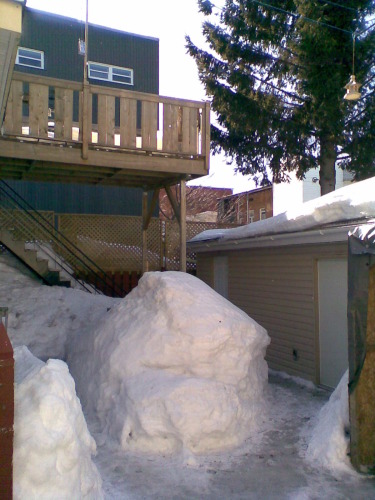
backyard.jpg

The little story of my batteries

When I first bought the bike, I paid a ridiculous price (200$) because the motor(or maybe the controller) and the batteries were dead. During the first week, I charged the four 12v batteries in parallel using the 12v output of a computer power supply. When I first received the batteries each one had about 2 to 3 volts of charge in them, but they were not completely dead. They had pass all winter without charge probably in cold condition. After one week of about 8hours of charge per day (I wanted to check them while they were charging to be sure nothing burns !) I was able to put them in series again, and charge them using the included charger. After that it took about two 2 charges of about 6hours using the 48v charger before the light finally turn green ! At this point I don't think the batteries were as good as new, but at least the voltage was right, so they would be able to turn the 48v motors !

At this point I tought the rest of the bike was O.K. But the bike really had problem at start. When I was already moving everything was fine, but starting from a stop did not work every time. After about 1/3 of the kilometer, it died. Nothing was working anymore. That's when I decided to move to XB-600 motor and controller.

After the long modification of the bike, I finally was able to ride the bike again for about two weeks. At first I was able to do about 3 kilometers, but it seems like each time I used the bike, the batteries were giving me more juice. The second ride was about 6km, and so on. Until one day I decided to make it all the way around the city ! This was the first time I depleted the batteries completely. I was able to do about 15km !! But for the last kilometers the bike was litterally crawling at about 2 to 3 Km/h, and the voltage cutoff of the controller was happening all the time when I was putting the accelerator to the floor. I waited until next morning to charge the batteries(big mistake !) and after I plugged them in the charger I went to Work. When I came back about 9 to 10 hours later, the light on the charger was still red ! And there was a really bad smell of sulphur in the air ! Normally after a normal ride, the batteries took about 6 hours to charge !

I opened the batteries case and found their form has changed ! They were once cubic, and now they were round ! Not like a ball, but their original form has changed. Since winter was to begin, I did not bought new batteries at that time. But now is the time ! I am still not sure If I will invest in lifepo4 batteries, I know they are a lot better than lead acid batteries, but I'm not sure If I want to put my ebike battery on Credit !

bubble_battery.jpg

I think I will not continue using two 48v battery in parallel. The experience was not that conclusive. It add a lot of weight to the bike, so the range is not really better. There was also a lost of power, because I used too small wires to connect everything together. I will probably rewire only one battery pack to the controller using big wire(something like 10awg or 12awg) with the smallest length possible to get the most out of that battery pack....maybe ShuntMod later !

So my blog is back !
I'll keep you in touch with my next mod !

gendronw

septechnologies

Okay I ran into this site while searching for something completely different hrmmm???
Anyone ever heard of these folks??? http://www.septechnologies.biz/

Gman's picture

EV Batteries

EV Batteries

MB-1-E's picture

MB-1-E Part Eight: Sprocket & Battery Case

For those of you who have been following this build, here are some pics of some of what I have accomplished lately.

I wanted to have the ability to remove my batteries or use various combinations for different ranges of travel. The case shown has 6-12V 9Ah batteries, I have two more that will fit directly below the case in a flatbar framework that will also support the case.
I used some jumper cables for the battery interconnections and small dia. copper tubing to make the connectors. I drilled a small hole thru the spade connector battery terminals and a small machine screw and nut to secure the homemade connectors to the batteries.

Case1.jpg

The DeWalt jigsaw case with carrying handle and hole thru to fit over the horizontal frame tube.

Case2.jpg

Case3.jpg

Case4.jpg

Here is the 60 tooth #35 Chain Sprocket mounted at the rear hub. I made a backing ring from some dense plastic and the red spongy material is made from a knee pad. I wanted something that would form around the spokes and help distribute the torque evenly.
I was worried that it would allow too much movement between the sprocket and the spokes but once compressed, there is very little, if any, movement there. I think it will work out fine.

I use 9 10-24, Low Carbon, Socket Head Cap Screws and washers with Stainless Steel Nylok nuts to sandwich it all together. On the sprocket side of the spokes, I cut two inner tube washers to fit where the sprocket contacts the hub and spokes. The inside diameter of the sprocket was a perfect fit to keep the sprocket concentric with the hub. I tightened the SHCS's carefully and spun the wheel, making adjustments until the sprocket was well alligned.

Getting 9 holes thru the sprocket, the backing ring and rubber spacer to match the spoke junctions was pretty tricky. I did a lot of measuring, head scratching and finally just placed the backing ring behind the spokes and used a pencil to mark the apex of each of the 9 spoke crossings then just eyeballed the tangent of each and drilled the holes on the drill press. It went together as planned and the bolts ended up right where I wanted them, so I think I got lucky.

Here are some pics of the sprocket.

Sprocket1.jpg

Sprocket2.jpg

Sprocket3.jpg

I'm still waiting on the controller and jackshaft assembly to arrive. I also ordered some 6ga welding cable for some of the wiring, a DPDT switch for Charge/ Run modes, an ESGE double kickstand and some #35 Chain.
I'm not out of the woods yet, I've got a lot yet to do but seem to be making slow but steady progress.
At this point in time I can only hope it all works nicely together. The help of others has really helped considerably in getting this figured out, thanks to all of those folks.

Oh, I received my two NICE heatsinks from Sturdly, they will look sharp and really help keep the new controller cool - THANKS Sturdly!!!

MtgBrkt.jpg
This is the steel flatbar mounting bracket

Sprkt_Case.jpg
This shows the location of the two lower batteries and the sprocket on the bike (thought I'd better check to make sure the sprocket would clear the frame ... it does, whew!)

Signing off for now, stay tuned for more backwoods inovation and shadetree mechanics.

Dave (aka MB-1-E)
The Bridgestone Project

MB-1-E's picture

MB-1-E Part Seven: Securing the batteries connecting them up.

Hey everybody,

The past few days I've been pretty busy, so didn't have a lot of time to get a much work done on the Mountain Bike.

After working with the acrylic enclosure for a full afternoon, I abandoned the idea. I got all the pieces cut and started gluing it up and then simply changed my mind.

I had a DeWalt jigsaw case that I never use and found that 6 of the 8 batteries fit inside nicely.
I cut the dividers out with a dremel tool so the box was now one open space to work with. Next, I bent some aluminum flatbar to fit inside and used small machine screws to secure it. This would keep the batteries in place within the case.

Once I got this done, I loaded it up with batteries and was able to pick it up and carry it as a unit.
I used a hole saw to cut two holes in the case so it would fit over the top horizontal bar on the bike.
Next, I bent some steel flatbar and made a strong support to hold the weight of the case and two more batteries below. I secured the steel flatbar using the existing water bottle and airpump screw bosses and socket head cap screws.

The case comes up a bit above the top bar, but doesn't interfere with pedaling or sitting comfortably on the bike.

I looked for connectors and wire at the local hardware stores and online but just didn't find exactly what I was looking for. I did order some 6ga welding cable from McMaster Carr that will go from the battery box to the controller and from the controller to the motor.

I also got some jumper cables which were fairly flexible and decided to use this wire for my interconnections at the batteries. As for the connectors, I got some small diameter copper tubing and started making my own. I drilled a small hole through each battery terminal and found some small machine screws and nuts that would secure the connectors to the terminals. I cut the copper tubing about 3/4" long, smashed one end closed to make a nice flat mounting flange. I tinned the cable ends and the copper connectors then heated them until they flowed together. I drilled a hole through the flange then removed any burrs and polished them up on the wire wheel.

I used some heatshrink at the ends to seal the insulation to the connectors and screwed the wire ends to the terminals.

It's a bit of a pain to do each one this way, but I think it will be a lot better connection than using push-on female spade connectors. Once all together, I'll coat the terminals and connectors with some nail polish to seal them.

Once set in the case, I shouldn't have to remove them, I'll just be charging them as a set.
I'll have a DPDT switch set up so I can change the two main leads from 24V series/ parallel to 12V parallel for charging with my Iota 12V charger.

I'll find a good connector that will allow for the controller leads or the charger to connect. I'll just open the case, remove it from the bike, close the case and carry it inside for charging, using the cases carrying handle.

Should I decide to later, I could divide the batteries up into two sets and make some saddlebag type cases for them, but I think this should work well, hopefully I won't need to change it.

Note: This building an electric bike from scratch is definately not for the faint hearted, there is a ton of trial and error and custom work involved and there's quite a lot to it. Those who get a kit should appreciate that most of the details have been worked out for you and only a few minor custom changes needed to make it suit one's individual bike. I'm not complaining, mind you, just trying to give some insight into what is involved in starting from scratch.
I get the satisfaction of success (or failure and having tried). I think I'll end up with close to what I want in an electric mountain bike, but it's no cake walk as I'm sure many here can testify.

Stay tuned for more, I should be getting my controller and jackshaft assembly soon.

Dave

Syndicate content

Who's online

There are currently 6 users and 262 guests online.

WWWATTS.NET aggregates electric vehicle related blogs and podcasts

Support V is for Voltage