- Forums
- V Forum
- Handbooks
- EV DownLoad Library
- Building E-Bikes
- Building Small E-Scooters
- Catalog of (known) commercial electric vehicles
- Controllers
- Electrical Circuits Basics
- Electric Bicycles
- Electric Motorcycles
- Electric Scooters
- Electric Vehicle Resources
- EV Accessories
- EV Batteries
- EV Motors
- EV Resource Links
- Legal
- Regenerative Braking
- Recent
Conversion
CBR 600 F3 CONVERSION-IT'S JULY AND I SHOULD BE RIDING, BUT....
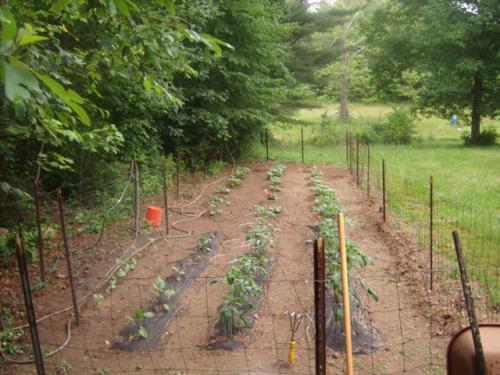
Submitted by racermike39 on Sun, 07/06/2008 - 03:48.Well another 3 weeks have passed, I am still not riding YET. Other, more important things have taken up every spare minute. The garden is in,

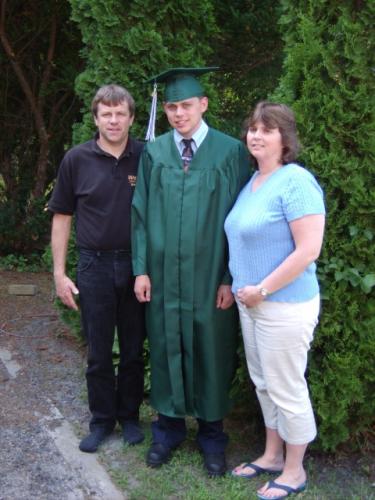
my oldest graduated from high school

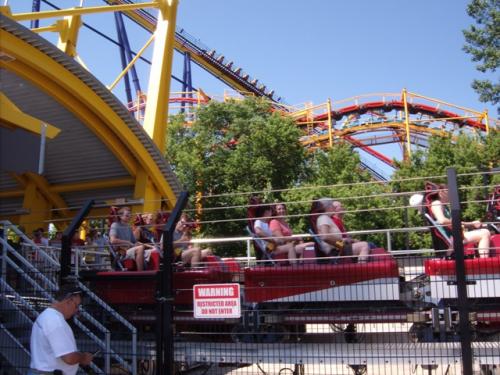
went to Cedar Point Park in Ohio,

and I was heavily involved for almost a week in the moving of our work place. Now I have a 6 mile commute to work.
AND my youngest son broke his arm at Scout camp. He is expected to make a complete recovery. Mostly his pride hurts more than his arm
.
So finding time to work on the bike has been difficult.
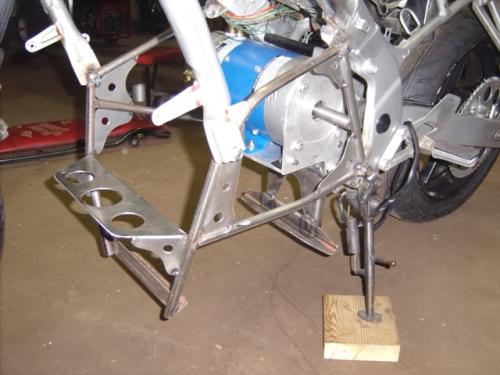
Here is the current status:
2 weeks ago, I went for a short test ride
. My batteries were very low, and everything was hooked up temporary, kind of hanging all over the place. The bike was slow, but I was able to test the low speed handling and balance. I was very happy. A big EV grin
. In the process of changing out some of the bad batteries, I shorted out the controller to the frame, and fried the controller
. A major rookie error, but that is part of the reason I took on this project, to learn by doing. I have since learned that I MUST disconnect the B+ connection from the controller BEFORE servicing the battery pack. What this has done however, is give me time to complete the balance of the work on the bike, while not being tempted to just ride it, and worry about finishing the "little" things later.
A few days ago, I started the final installation of the body work.
Thursday, July 3rd, I finished the main charging station.

I used a 9 pin trailer style connector, and installed the female side on the main cowl of the bike.

July 4th it was raining here most of the day, so I was able to work on the bike all day. I finished the dash by installing a cycle computer and the Pak-Trakr.

I really like the Pak-Trakr. It is an amazing little tool. For the cycle computer, I chose a Panorama v-12. I used JB QUICK WELD to attach the magnet to the bike wheel. The sensor tie wraps to the fork, and the fender covers it all up so it is protected, and not visable. The display will be attached to the face of the dash with HD velcro.
I have finished the installation of the 2-Power Stream 36 Volt onboard chargers. They fit nicely under the tank. The batteries balanced out pretty well while charging. The Pak-Trakr was very helpful during the testing of the on board chargers. I am in the process of making the extention cord storage area in the tank, so the cord will come out of the gas cap.

So now, as soon as my controller comes back (hopefully by July 12th) I should be able to ride with everything functioning and complete.


That's it for now. I hope my next post is with speed and range information.
I just wanted to thank all who post on this forum. I have used a TON of info from this site. Many of you deserve much thanks. Thanks for the encouragement along the way, and thanks for taking the time to check out my project blog.
HONDA CBR 600 F3 CONVERSION.....A LITTLE MORE PROGRESS
Submitted by racermike39 on Wed, 05/28/2008 - 03:20.Well it's been about 3 weeks, and I haven't touched the bike for about 2 of the three. I finally had to stop neglecting all the other things I should be doing, so the bike has been back burnered for a while. I have completed the fabrication of the battery rack. Final welding still needs to be done.


I have located most of the components and completed the preliminary wiring. I still need to wire the battery charging circuit and the PakTracr needs to be wired.

If you look close, you can see the fuse holder, contactor and controller. I have left the option open to run the 7th battery under the tank. This will be a plug and play additional battery. Two connectors will plug in to the main battery string and charging circuit. For now, the 7th battery will not be tied into the Pak Trakr.
The DC-DC converter is in the factory battery location, under this aluminum plate

Here is the throttle and the other side otf the 7th battery.

All this stuff still fits inside the bodywork pretty well.

Next I need to double check the primary wiring, and do a power up and test. Then I will finish integrating the factory bike wiring to the controls and such. I will also be adding some HDPE sheet between all the batterys and mounting points as taught by "fire is BAD". Thanks for sharing that one!
I hope to power it up this weekend. I hope I can get the wiring correct, and the controller to respond properly. This is my greatest weakness. My confidence is low, as well as my skill level in this area.
Andrew, Frodus & JDH!!! Where are you all at now?????
Fill us in!!
HONDA CBR 600 F3 CONVERSION
Submitted by racermike39 on Sun, 03/30/2008 - 11:54.Well this is my third EV project. I was so encouraged by the results of the Kawasaki 4-wheeler conversion, that I knew a daily driven street vehicle was within reach. I sold my ICE race car last fall, and decided to devote the $ to an electrtic vehicle. I calculated and researched cars, and decided that a car at this time was not within reach financially. With permission from my wife, I decided on an electric motorcycle. I researched this forum, the Austin EV website and many other links to nail down the voltage, frame and bike size. I was inspired by many, mostly by JDH2550's CB750 conversion. The information and links from his blog were most helpful.
I started looking at sport bike frames in the 600-750 range. My goal was to purchase a bike that had disk brakes, good aerodynamics, and stout enough to handle the weight and have room enough for a 84-96 volt pack. My first searches were for a cheap donor. What that led to was long drives to look at junk. I later upped my threshold of spending on a donor. In the end, I wanted a bike that looked good, was reliable, good part availability, supported well by the aftermarket such that when it was completed, it would represent a well designed and performing EV. I want to build a bike that could be sold for reasonable money, to possibly finance another EV, and sell it with confidence that it was with good quality, matched components.
Here are the goals.
96 Volt
26 mile commute with 8 miles highway, and 18 miles 30-45 MPH secondary roads. Charge at work.
50 mile range at approx 45 MPH.
70 MPH capable.
Rides to the beach with my wife. 30 mile round trip.
The donor search ended with the aquisition of a 1997 Honda CBR 600 F3. A very good running clean bike, only needing front fork seals, chain and rear tire. We found it on Craig's List. This is the night we brought it home.

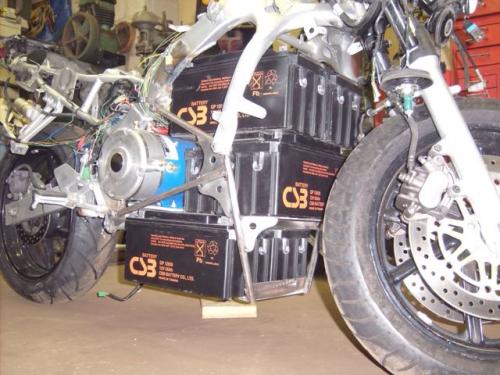
We have removed the ICE, and work began to try and fit 8 UB12550 55AH batteries in this frame.


I was conviced I could model the bike in my CAD system (SolidWorks)and determine where all the batteries would/could go. What I quickly learned was they wouldn't fit. I did not want to eliminate or modify the factory body work such that it was obviously electric. I was also trying to maintain the aerodynamics. The SolidWorks model proved that it would not work. Also I was loosing patience measuring and modeling. Here is the SolidWorks model I used:

This is the configuration I will use. However, I did not arrive at this configuration as a result of the CAD model. I had to do the battery oragami as did JDH25550 did on his CB750.
As much as I tried to avoid this excersize, it was the only way to be sure it would work.

This confirmed what the CAD model was telling me. I realized I would have to modify the lower fairings to get all the batteries in. I found that the lower fairing needed to be widened 4-1/2" to allow the space to be filled with batteries.

From the side and even the front, the fairing did not look rediculous. This allowed the batteries to be positioned such that 8 (96V) would work. Up to this ponit, 72 Volts looked to be all this frame would handle.

Here is a shot with the tank in place. The tank has not been cut out yet, so I will have additional room for the controller, contactor and DC-DC converter.

The only modification so far was spreading the fairing, and trimming out a protrution that in the fairing that was costing about 2" of battery room.

Next I was able to use the factory manual to get rid of the engine management computer and wiring. I also mapped out the wiring for using the key switch to activate the DC-DC converter, and the run/stop switch to activate the contactor. I think I stole those ideas from andrew on this forum.
The next step is to get the motor here and get it mounted. I will keep you posted as things develop.
Thanks again for all your help!
My First Real Conversion
Submitted by racermike39 on Tue, 01/01/2008 - 08:48.After experimenting with an EZ-GO 36V golf cart, an Elec-Trak E-14, and a couple of electric scooters, we decided to go for a real conversion.


We stared with a Kawasaki 110 4-wheeler that we bought well used, and rode for 2 years until the transmission let go. It is not the best looking thing, but mechanically it was pretty good (tires, brakes and suspension).

We test fit the Elec-Trak 12 HP 36V motor before we spent any money.

I ordered a Kelly controls 200Amp 36-48V controller, and "hid" it under the tank. I used John's idea from his 750 conversion blog.

This controller comes with a reversing curcuit that doesn't require an additional contactor.


Next we monuted the motor.
MB-1-E Part One: Electric Conversion - 1985 Bridgestone Mountain Bike
Submitted by MB-1-E on Thu, 05/10/2007 - 16:01.

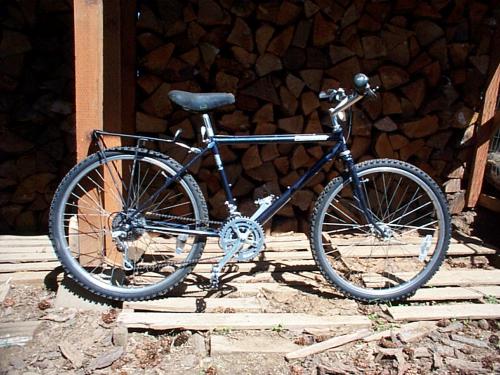
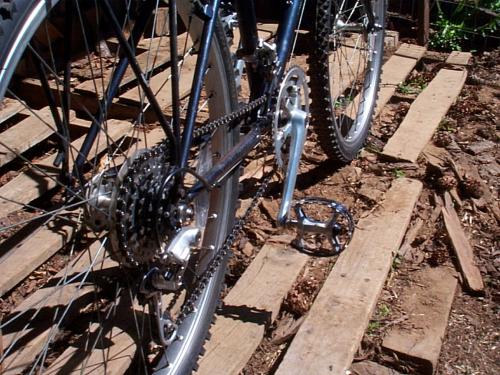
1985 Bridgestone MB-1 BEFORE Conversion:
(Note: I will be adding some diagrams and photos as the project progresses and I have time to add them)

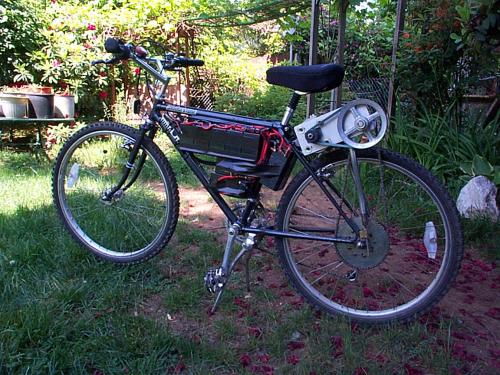
Not fully refined but a working proto-type
How It All Began
As Spring hits the Pacific Northwest, I find myself wanting to get out and enjoy the great outdoors.
I've had a Mountain Bike for many years, but haven't been riding it in the last 5+ years.
Well, my wife asked me to work on her bike a few weeks ago and to be blunt, it's a POS ... so I went out and bought her a new one. Boy, have bikes changed since I got mine back in 1985. Hers is a 21 speed, front suspension, very reasonable cost ...
Since my bike was a quality bike to begin with, I took it all apart, replaced the bearings, cleaned and adjusted everything and polished the few chromed bolts that were starting to rust. In the process I found out that my old bike is now quite sought after, since Bridgestone went out of business in the early 90's.
I decided that I wanted to convert it to an Electric Bike, but due to the fact that it's probably worth more now than it was when I bought it (approx. $520 back in 1985), I didn't want to compromise it doing a conversion.
I got on the web and found many resources available ...
... one of which was Eric Peltzer's Electric Bike site.
I liked the design and he has done a great job of documenting his build, so I wanted to do something similar. It's not surprising that Eric did such a fine job, he is also a sculptor, creating some pretty cool looking works of metal art.
As any of you, who have already converted a bike, will testify, every bike, every motor etc. is slightly different and requires quite a bit of customizing.
"One Size" does not necessarily fit all.
At any rate, when I read about and viewed Eric's bike, I was hooked. I envisioned how fun it would be to ride the back roads around here. There are lots of abandoned logging roads here that have been closed off due to lack of funding to maintain them. Some are still open and I do take the 4WD Toyota on many but there are tons more that have what we call "Tank Traps" or bulldozed trenches and berms to keep the 4WDs and cars out. It's either State or mostly Federal land, so it's open to the public, just not accessible by car or truck.
These roads are sometimes rather steep, dirt or gravel, usually overgrown and the requirements to traverse them would be somewhat different than your average electric conversion kit.
I don't like the noise, destruction and pollution of ATV's or Dirt Bikes, so an Electric Bike that I can charge using my 50W wind generator and 37W solar panels at home seems like the way to go.
Perceived Requirements for this conversion:
...Use existing Mountain Bike for the conversion
...Be Durable
...Ability to climb dirt/ gravel inclines
...Be light enough to lift into the truck and over obstacles
...Have a fairly good range
...Be easy to work on and maintain
...Keep the conversion cost down as much as possible. ($500-$700)
The Motor:
Eric's bike has a nice 1hp Scott. Scott motors this size seem to cost around $250+ no matter where you get them. I was lucky and found a new 3/4hp Scott for $50 on eBay ($68 w/ shipping).
It's a 24V 560W 3000 RPM DC motor rated at 30A
The motor has a 5/8" keyed shaft on both ends which makes it pretty versatile for various setups.
The Controller:
Eric Peltzer's latest version uses a 180A Controller.
Controllers are expensive! A 180A was over my budget by a considerable amount.
I'm not sure what Amperage the Scott 1hp pulls at 24V, but it's bound to be more than the 30A of my 3/4hp Scott. With this in mind, and the fact that I will adjust the gear ratio as necessary to keep the motor from exceeding the controller's maximum amp rating, I decided to go with a 100A Controller. (I hope I won't regret it, but the Navitas 100-36 does have thermal protection and is rated at 30A continuous at 24V or 20A continuous at 36V with 100A max. This was within my budget. I'll be keeping an eye on the temperature of the controller and may decide to incorporate a heat sink into my design.
The Throttle:
The Navitas 100-36 will accommodate either a 0-5k type throttle or Hall Effect type. I decided on a 0-5k twist grip for my build. I considered a thumb lever but decided that there wasn't much room with my Shimano gear levers already taking up the position that would work the best for good throttle control.
The Batteries:
This is another area where my budget was taxed. This, however, is my gas tank so I tried to put as much capacity as possible into the design without getting too bulky, too heavy or too far over budget.
I wanted the center of gravity to be as low as possible, while keeping good clearance under the bike for traversing the terrain.
I used AutoCAD to figure my clearances and went back and forth between my 3D drawings and battery retailer's websites to get the dimensions of batteries that would best fit the area I had to work with.
I wanted all of the batteries to be the same capacity and my mountain bike frame is an 18" model (rather small), so it took a while to come up with the best size.
I was able to fit eight - 9Ah 12V AGM SLA Batteries (UB1290) in and below my frame opening without pedal interference. (At least in CAD that is ...)
edit - (Note: Some changes were made to the following as noted later in the project)
I'll be making a battery enclosure using acrylic sheet .093" thick. The plan is to make the case fit within the frame opening (under the horizontal bar).
I'll use existing socket head cap screws (used for attaching a water bottle and pump etc) to attach the enclosure. Next I'll place 6 of the batteries into the enclosure at various angles to fit. Once in place, I'll use a spacer of some sort to make room for the terminals and connections and wrap each battery in plastic wrap. Next, I'll use expanding foam to take up the spaces between the batteries. I'll remove the batteries, plastic wrap etc then trim off the excess foam with a hand saw.
I'll make a cover for the enclosure out of the acrylic sheet and secure with some thumb screws. I'll make a smaller frame or enclosure for the two batteries below the frame.
The controller will be out in the open so it keeps cooler. It will be in a protected area (it's only 2"x3"x1") so fairly easy to place.
The Jackshaft:
The 3/4hp 560W Scott Motor turns 3000 RPM so obviously needs reduction. I'm going to start out with a 9:1 reduction but may go with as much as 11:1 if needed to reduce the load on the controller.
As Eric's site so helpfully pointed out, in order to keep a chain from being too noisy, they are best kept down to 1000 RPM or less. (That's not a direct quote, but, generally, what I understood about chain speed).
I will, therefor, be using a V-belt to reduce the motor rpm to 1000 RPM at the jackshaft.
I'm having the jackshaft made by "Tuff Industries", a very helpful outfit that I found on E-bay that specializes in jackshafts and go-kart assembly fabrication. The jackshaft assembly will consist of a flat vertical plate with a 5/8" dia keyed shaft that runs horizontal and parallel to the motor shaft.
It has a welded on hub that houses the bearings and will have a 6" dia aluminum sheave on one side of the plate and a freewheeling 22 tooth #35 chain sprocket on the other side of the plate. The plade bolts directly to the Scott motor and should be easily adjustable for belt tension and very stable.
I will fabricate an adjustable support shaft that is in line with the #35 chain and mounts to an existing boss on the back of the bike frame. This should provide easy adjustment for chain tension.
The Rear Sprocket:
I wanted this to be a "Pedal Assist" for several reasons. One is the law on motorized bicycles here in Washington requires it to have pedals to be considered a non-licensed vehicle. Two, I will be on back roads and if something breaks or my batteries run out, I want a way to get back home or to my truck.
The #35 driven sprocket will, therefor, need to be on the left hand side of the bike.
Since I don't want to make any permenant changes to the bike, I'll be making a sprocket mount that uses a split ring backing plate (sort of like the Currie attachment).
I ordered a cheap 60 Tooth go-kart steel sprocket that has a bore of 1-3/8" and a bolt circle of 3-1/4".
By my measurements this should slip right over the outside of the rear hub w/ slight modification.
I'll make the split backing ring with a 3" I.D. and 4-1/4" O.D. so it surrounds the hub (inside of spokes) and sandwiches the spokes between this and the 60T sprocket. I'll make some neoprene gaskets for each side of the spokes and use some spacers at the bolts to keep from damaging the spokes.
The Motor/ Jackshaft Assembly Mount:
From my best sources, I've learned that the closer I place the motor and jackshaft to the seatpost, the more stable and better off I'll be. (Thanks to both Chuck and to Robert, my brother).
The bike frame has two factory brazed, threaded bosses that are in-line with each other. I think that this will be the bast place to attach the motor mount.
I want the mount to hinge at this point so that I can loosen the attachment bolts, tighten the chain tensioning rod then re-tighten the motor mount bolts.
So the motor and jackshaft will be one unit and hinged at mount.
Wiring:
Initially I'll make this a 24V system.
I'll place the batteries in Series/ Parallel to provide 36Ah at 24V.
Charging will be a bit of a challange since I only have a good 15 Amp 12V charger right now. It's an Iota that has the QD4 three stage charging controller and should work well with AGM batteries.
I think there is a way to wire the batteries so that they are what I've heard called "Buddy" Series/ Parallel. From what I know this is a system used by Alternative Energy folks and is supposed to keep a better balanceed battery bank when using Series/ Parallel. I'll have to do more research to figure this one out.
The point I'm making here is that in using this system, if it's wired the way I think it is, I will at least be able to charge 4 batteries at a time (of the 8 total) without disconnecting any leads. (I'll post a diagram of this later, to see if any of you are familiar with doing it this way).
I'm not worried about lights yet, I think I'll just use separate NiMh cells for lights.
I will need a good battery disconnect and a 4 wire key to turn the controller and possibly later lights on and off.
As noted, I'll be updating my blog as I progress.
Any and all comments are welcome. There are a lot of good minds here that will likely know or see something I haven't taken into account. I'm open for suggestions at any stage of this project. I either have all parts or they have been ordered and will be here shortly.
Finding the time to put it together and further engineer it is another story.
Thanks for visiting my blog.
Dave